
Why IoT Integration Is Fueling Rapid Expansion of the NFC Market Worldwide
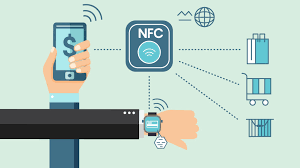
The structural categorization of short-range wireless technologies reveals a highly diverse marketplace split between hardware components, operational modes, and end-user deployment sectors. Hardware-wise, the industry is split between active reader devices capable of generating electromagnetic fields and passive tags that rely entirely on external fields to power their internal chips. These passive components come in various form factors, including adhesive stickers, embedded key fobs, glass-encapsulated implants for livestock tracking, and high-security smart cards. From a operational standpoint, devices function across three primary modes: peer-to-peer data sharing, card emulation for secure transactions, and reader/writer mode for extracting info from smart tags. Each mode addresses unique user requirements, ensuring that a single smartphone can serve as a payment card, a data transfer tool, or an industrial scanning device depending on active software commands. To explore how these individual sub-sectors are performing relative to one another, an evaluation of the Nfc Market segment provides clarity on component demand shifts and software development priorities.
From an industry application perspective, the market can be categorized into banking and finance, transportation, retail, healthcare, hospitality, and smart home automation. The banking sector continues to hold a dominant share due to the sheer volume of financial transactions executed daily, but the healthcare and hospitality sectors are showing the fastest adoption rates. In modern hotels, traditional magnetic stripe room keys are being rapidly replaced by wearable wristbands and mobile application keys that allow guests to bypass front desk check-ins, unlock room doors, and charge restaurant meals directly to their room accounts via proximity taps. In educational environments, unified campus card segments allow students to access secure dormitories, borrow library resources, and purchase cafeteria meals using a single mobile credential. This breakdown highlights that while the core underlying technology remains consistent, its commercial value is unlocked by customizing software and hardware enclosures to solve sector-specific security and operational challenges.
What are the three primary operational modes utilized by modern Near Field Communication devices? The three primary operational modes are card emulation for payments, reader/writer mode for scanning tags, and peer-to-peer mode for direct device-to-device data sharing.
How is the hospitality sector using proximity communication to enhance the guest experience? Hotels use it to issue digital room keys to smartphones, allowing guests to skip front-desk registration lines, unlock room doors, and securely charge amenities to their account.
➤➤➤Explore MRFR’s Related Ongoing Coverage In Semiconductor Industry:
Deep Learning In Computer Vision Market
Data Center Accelerator Market

 English
 Arabic
 French
 Spanish
 Portuguese
 Turkish
 Dutch
Dutch
 Italiano
 Russian
 Romaian
 Portuguese (Brazil)
 Greek
Greek