
The Psychological Shift from Human Intuition to Quantitative Logic within the Global Automated Algo Trading Market
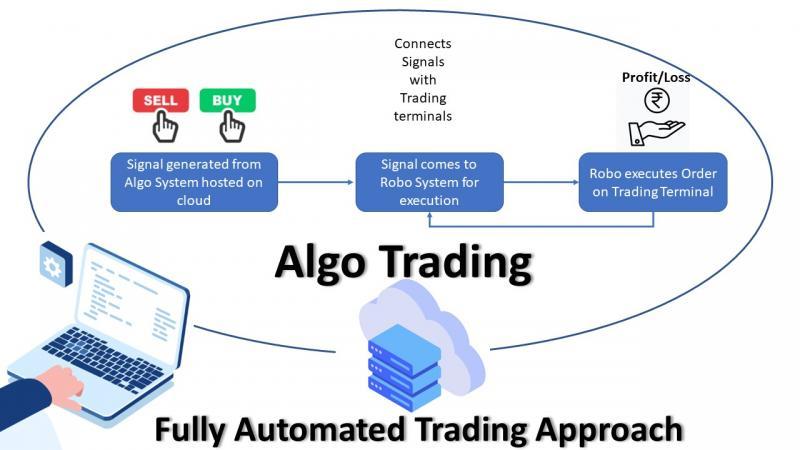
The rise of the automated algo trading market marks a significant psychological shift in the financial world, moving away from "gut feelings" toward rigorous quantitative logic. In the past, legendary traders relied on their intuition and experience to make split-second decisions on the trading floor. Today, the most successful market participants are data scientists and mathematicians who build models based on statistical probability. This shift has removed much of the emotional bias—such as fear and greed—that often leads to poor investment choices. Algorithms do not panic during a market downturn; they simply execute the instructions they were given, often acting as a stabilizing force by buying when others are selling based on fundamental value. This transition has also changed the recruitment landscape for financial firms, with a growing demand for experts in Python, R, and quantitative finance over traditional MBAs.
Analyzing Automated Algo Trading Market trends reveals that even retail investors are adopting a quantitative mindset. The availability of "no-code" algorithmic platforms allows individuals with no programming background to build and test their own trading strategies. This democratization is fostering a culture of back-testing, where strategies are validated against historical data before any real capital is at risk. While this reduces the likelihood of impulsive mistakes, it also creates a "crowding" effect, where many traders use similar algorithms, potentially leading to increased volatility if those models all trigger sell signals at once. To counter this, advanced firms are looking toward "reinforcement learning," where AI agents learn to trade by interacting with the market and receiving rewards for successful outcomes. This moves beyond static rules and toward a more dynamic, evolving form of intelligence that can simulate human-like learning at an accelerated pace.
What is 'back-testing' in algorithmic trading? Back-testing is the process of running a trading strategy against historical market data to see how it would have performed in the past, helping to verify its potential effectiveness.
Does automated trading completely remove human error? No; while it removes emotional errors during execution, "human error" can still occur in the programming of the algorithm or the selection of the data used to train it.
➤➤➤Explore MRFR’s Related Ongoing Coverage In Semiconductor Industry:
Enterprise Governance, Risk And Compliance Market
Wireless Security System Market
Energy Management System Market

 English
 Arabic
 French
 Spanish
 Portuguese
 Deutsch
 Turkish
 Dutch
Dutch
 Italiano
 Russian
 Romaian
 Greek
Greek