
Identifying Key Shifts in Modern Instrumentation: Current Quantum Sensors Market Trends and Patterns
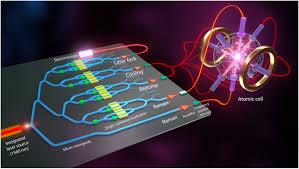
The landscape of modern instrumentation is shifting toward a more integrated and "quantum-ready" framework, characterized by several emerging Quantum Sensors Market trends. One of the most notable patterns is the move toward hybrid sensing systems, which combine traditional MEMS (Micro-Electro-Mechanical Systems) with quantum elements to provide a balance between cost and performance. This approach allows industries to benefit from quantum precision where it matters most while maintaining the robustness of proven technologies. Another significant trend is the rise of "quantum-as-a-service," where cloud-based platforms allow users to access data from remote quantum sensors, such as atomic clocks or gravimeters, for high-precision timing and positioning. This trend is particularly relevant for the telecommunications sector, which requires nanosecond-level synchronization for 5G and 6G networks. As these trends continue to develop, we are seeing a shift in focus from purely hardware-centric innovation to software-driven enhancements, where advanced algorithms are used to filter noise and improve the signal-to-noise ratio of quantum measurements.
Furthermore, the environmental sustainability aspect of quantum sensing is gaining traction in international discussions. Quantum sensors are being deployed to monitor carbon capture and storage sites with high accuracy, ensuring that stored CO2 does not leak back into the atmosphere. The Quantum Sensors Market Trends also point toward an increased use of quantum magnetometers in the automotive industry for highly accurate battery monitoring in electric vehicles. This can lead to longer battery life and faster charging times by providing real-time data on the internal state of the battery cells. In the realm of consumer technology, we are seeing the first steps toward integrating quantum-inspired sensors into smartphones for improved indoor navigation, where GPS signals are typically weak or unavailable. This broad spectrum of applications indicates that quantum technology is no longer a distant future prospect but a rapidly evolving reality that is touching every corner of the global economy.
How do quantum sensors improve 5G networks? They provide the ultra-precise timing synchronization (via atomic clocks) necessary for the high-speed data transfer and low latency required by 5G and future 6G infrastructures.
What is the role of quantum sensors in electric vehicles? They are used for precise current and temperature sensing within battery management systems, which helps in optimizing performance, safety, and the overall lifespan of the battery.
➤➤➤Explore MRFR’s Related Ongoing Coverage In Semiconductor Industry:
Enterprise Governance, Risk And Compliance Market
Wireless Security System Market
Energy Management System Market

 English
 Arabic
 French
 Spanish
 Portuguese
 Deutsch
 Turkish
 Italiano
 Russian
 Romaian
 Portuguese (Brazil)
 Greek
Greek