
Operational Efficiency and the Role of Building Automation System Market Data
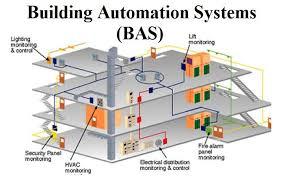
In the modern age, data is the most valuable asset in facility management, and Building Automation System Market data provides the insights needed to transform raw numbers into energy savings. Every sensor in a building generates a stream of information—temperature readings, occupancy levels, light intensity, and power draw. By aggregating this data, managers can identify "energy leaks" where systems are running unnecessarily. For example, data might show that a certain floor's HVAC is running at full capacity on weekends when no one is present. Addressing these inefficiencies can lead to immediate and substantial cost reductions. Furthermore, this data is essential for "Benchmarking," allowing property owners to compare the performance of different buildings within their portfolio. This transparency creates a culture of accountability and continuous improvement, where facilities are constantly being tweaked for better performance.
The Building Automation System Market data also plays a critical role in the transition to predictive maintenance. Instead of waiting for a pump to break, engineers can look at vibration and temperature data to predict when it is likely to fail. This proactive approach saves thousands of dollars in emergency repairs and prevents disruption to building occupants. In the broader context of the "Smart City," building data can be shared with utility companies to help manage the power grid. If the grid is under strain, the utility can send a signal to automated buildings to slightly raise their thermostat settings, collectively reducing the load and preventing blackouts. This level of data-driven collaboration is the cornerstone of future urban resilience. As machine learning algorithms become more sophisticated, the ability to process and act on this data will become the primary differentiator between high-performance buildings and obsolete ones.
What kind of data do building automation systems collect?
They collect a wide range of data including indoor/outdoor temperature, humidity, CO2 levels, occupancy, energy consumption per circuit, light levels, and the operational status of all mechanical equipment.
How is this data used to save money?
The data identifies patterns of waste, such as heating an empty room, and allows for "demand response," where the building reduces power usage during times when electricity prices are highest.
➤➤➤Explore MRFR’s Related Ongoing Coverage In Semiconductor Industry:
Battery Management System Market
Human Centric Lightings Market

 English
 Arabic
 French
 Spanish
 Portuguese
 Deutsch
 Dutch
Dutch
 Italiano
 Russian
 Romaian
 Portuguese (Brazil)
 Greek
Greek