
Diversification Strategies within the Commercial Auto Insurance Market Segmentation
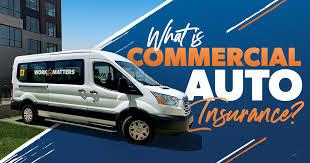
The Commercial Auto Insurance Market is not a monolithic entity; rather, it is composed of various segments that each require specialized underwriting expertise. From small artisan contractors with a single van to massive logistics firms with thousands of power units, the needs of the policyholders vary wildly. This segmentation is critical for insurers to effectively manage risk and provide competitive pricing. Large fleets often utilize self-insured retentions (SIR) or captive insurance models to manage their costs, while smaller businesses rely on traditional fully insured products. By understanding the Commercial Auto Insurance Market segment dynamics, insurers can develop targeted products that address the specific pain points of each group. For example, a plumbing company needs coverage for expensive tools and equipment inside the vehicle, whereas a long-haul trucking company is more concerned with cargo liability and driver fatigue management. This tailored approach ensures that businesses are not paying for coverage they don't need while being fully protected against the risks they actually face.
In addition to business size, the type of cargo being transported also dictates insurance requirements. The transportation of hazardous materials, for instance, carries an entirely different set of risks and regulatory mandates compared to the transport of dry goods. Insurers must have specialized knowledge in environmental law and hazardous waste cleanup to properly underwrite these risks. Similarly, the rise of temperature-controlled logistics for pharmaceuticals and fresh produce has created a demand for "reefer" insurance, which covers losses due to mechanical failure of cooling units. As the global economy becomes more specialized, the insurance market must keep pace by offering increasingly granular coverage options. This trend toward specialization is also seen in the rise of usage-based insurance for "gig" workers who may only need commercial coverage for specific hours of the day. The ability to pivot and provide flexible, segment-specific solutions will be a key differentiator for successful insurance carriers in the coming years.
What is a captive insurance model for large fleets? A captive insurance model involves a company creating its own insurance subsidiary to insure its own risks, providing more control over claims and potentially lower long-term costs for very large fleets.
Why is "reefer" insurance important for logistics? Reefer insurance protects against the financial loss of perishable goods if a refrigerated trailer's cooling system fails, ensuring that the high value of the cargo is protected during transit.
➤➤➤Explore MRFR’s Related Ongoing Coverage In Semiconductor Industry:
Solid State Power Amplifier Market
Debt Collection Software Market

 English
 Arabic
 French
 Portuguese
 Deutsch
 Turkish
 Dutch
Dutch
 Italiano
 Russian
 Romaian
 Portuguese (Brazil)
 Greek
Greek