
Maximizing Energy Efficiency with Smart Thermostat Solutions
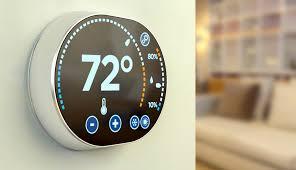
The battle for the wall is intensifying as traditional HVAC manufacturers and Silicon Valley giants compete for Smart Thermostat Market Share. In the early days, a few pioneering startups defined the category, but today the landscape is crowded with established players and aggressive newcomers. This competition is driving rapid innovation, as each company strives to offer a more compelling ecosystem. Some brands focus on deep integration with voice assistants and other smart home products, while others lean into their heritage of mechanical reliability and professional-grade HVAC expertise. This duality provides consumers with a wide range of choices, from high-end "designer" thermostats to budget-friendly models that focus on core functionality. The market is also seeing significant consolidation, with larger companies acquiring smaller innovators to bolster their software capabilities or expand their geographic reach.
Market share is no longer determined solely by hardware specs; software experience and data privacy are becoming major differentiators. Consumers are increasingly wary of how their data is used, and companies that prioritize transparency and security are gaining an edge. Furthermore, the ability to offer a "total home" solution—where the thermostat works perfectly with the same brand's security cameras, doorbells, and smoke detectors—is a powerful incentive for brand loyalty. We are also seeing the rise of "white-label" solutions, where utility companies offer their own branded thermostats to customers as part of an energy-saving package. This strategy allows utilities to maintain a direct relationship with the consumer while managing grid load more effectively. As the market continues to evolve, the leaders will be those who can balance technological prowess with user-centric design and a commitment to environmental stewardship.
Which brands are currently leading the market? Google (Nest), Ecobee, and Honeywell (Resideo) are among the top players, but many other brands like Emerson and Wyze are also gaining significant ground.
Can I use different brands of smart devices in the same house? Yes, especially if they are compatible with a common platform like Matter, Amazon Alexa, or Apple HomeKit, which allows different brands to work together.
➤➤➤Explore MRFR’s Related Ongoing Coverage In Healthcare Domain:
Solid State Power Amplifier Market

 English
 Arabic
 French
 Spanish
 Portuguese
 Deutsch
 Turkish
 Dutch
Dutch
 Russian
 Romaian
 Portuguese (Brazil)
 Greek
Greek