
Harnessing Information for Precision Decision-Making using Industrial Control Systems Market Data and Analytical Frameworks
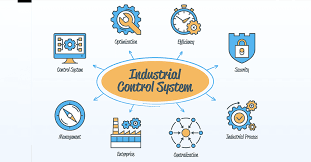
In the modern industrial era, data has become the most valuable commodity, providing the insights necessary to drive efficiency, safety, and profitability. The utilization of industrial control systems market data is central to this transformation, as organizations move beyond simple monitoring to complex predictive analytics. By collecting and analyzing vast amounts of information from every corner of the factory floor, companies can identify patterns that were previously invisible, allowing them to optimize everything from raw material usage to energy consumption. This data-driven approach is particularly effective in high-volume industries where even a fractional percentage improvement in efficiency can lead to millions of dollars in annual savings. The ability to visualize this data through sophisticated dashboards is empowering managers to make informed decisions in real-time, responding to market fluctuations or equipment issues with unprecedented speed and accuracy.
The challenge, however, lies in managing the sheer volume and variety of data generated by modern control systems. This has led to the development of specialized industrial data platforms that can aggregate information from different sources and present it in a unified, actionable format. These platforms often incorporate artificial intelligence to filter out noise and highlight the most critical insights, ensuring that decision-makers are not overwhelmed by information. For those seeking a deeper understanding of these metrics, Industrial Control Systems Market Data provides the baseline and benchmarks needed to measure success. As data security and privacy regulations become more stringent, the focus is also shifting toward secure data governance and ethics, ensuring that the wealth of information generated by industrial processes is handled responsibly. Ultimately, the successful application of data will be the primary differentiator between industry leaders and those who struggle to keep pace with the digital revolution.
What is the "noise" in industrial data, and why must it be filtered? "Noise" refers to irrelevant or redundant data points that don't provide useful information; filtering it allows analysts to focus on significant signals that indicate performance issues or opportunities.
How can real-time data visualization improve factory management? It allows managers to see the current state of production at a glance, enabling them to quickly identify bottlenecks, equipment failures, or safety risks as they happen.
➤➤➤Explore MRFR’s Related Ongoing Coverage In Healthcare Domain:
Property Casualty Reinsurance Market
Public Address Voice Alarm System Market
Quad Flat No Lead Packaging Market
Radio Frequency Front End Market

 English
 Arabic
 French
 Spanish
 Portuguese
 Deutsch
 Dutch
Dutch
 Italiano
 Russian
 Romaian
 Portuguese (Brazil)
 Greek
Greek