
Structural Shifts in the Footwear Industry: A Deep Dive into the Smart Shoe Market Segment Analysis and Emerging Opportunities
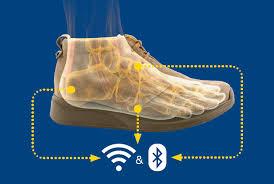
The ongoing smart shoe market segment analysis reveals that the industry is splitting into two distinct paths: the "integrated" path and the "modular" path. The integrated path involves shoes where the technology is built permanently into the sole, offering a sleek look and a seamless user experience. The modular path involves removable sensors or smart insoles that can be swapped between different pairs of shoes. Each approach has its own set of advantages and challenges. Integrated shoes are often more accurate but have a limited lifespan based on the durability of the shoe itself. Modular sensors are more cost-effective and sustainable but may suffer from slight inaccuracies if not positioned correctly. Understanding these nuances is vital for both manufacturers and consumers.
Beyond the hardware, the "service" segment of the market is becoming a major profit center. This includes subscription-based digital coaching, premium data analytics, and community platforms. Many companies are shifting toward a "Shoes as a Service" model, where the initial purchase of the footwear is just the beginning of a long-term financial relationship with the customer. This model provides a steady stream of revenue that can be used to fund continuous software updates and improvements. As the hardware becomes commoditized, the software and service layers will become the primary battleground for differentiation. The Smart Shoe Market Segment study emphasizes that companies failing to build a strong digital ecosystem around their physical products will struggle to remain relevant.
What is the difference between a smart shoe and a smart insole? A smart shoe has sensors built into its structure, while a smart insole is a removable insert that can add tracking capabilities to almost any traditional shoe.
Is there a specific app I need to use with these shoes? Most brands have their own proprietary app, but many are now compatible with third-party platforms like Strava, Apple Health, or Google Fit.
➤➤➤Explore MRFR’s Related Ongoing Coverage In Semiconductor Industry:
Semiconductor Inspection System Market
Surface Mount Technology Equipment Market
Electro-Optic Modulators Market

 English
 Arabic
 French
 Spanish
 Deutsch
 Turkish
 Dutch
Dutch
 Italiano
 Russian
 Romaian
 Portuguese (Brazil)
 Greek
Greek