
The Strategic Importance of Market Segmentation: Tailoring Solutions for the Card Connector Market Business Insights
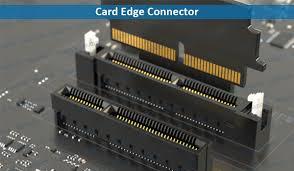
Deep market segmentation is the key to unlocking hidden value in the complex world of electronic interconnects. This group discussion delves into how businesses use specific insights to tailor their R&D and marketing efforts toward high-value opportunities. When we look at Card Connector Market Business Insights, we see a clear divide between "commodity" connectors used in low-cost toys or peripherals and "mission-critical" connectors used in medical implants or satellite systems. For a business to thrive, it must decide where it wants to play on this spectrum. High-volume players focus on operational excellence and cost reduction, while specialized players focus on intellectual property and high-performance materials. Understanding the specific pain points of different customer personas—such as the hardware engineer looking for EMI shielding or the procurement officer looking for supply chain stability—allows a company to craft a more compelling value proposition.
Additionally, the rise of the "Internet of Everything" means that connectors are being integrated into products that never previously required electronic interfaces. From "smart" furniture to connected apparel, the potential applications are limited only by imagination. This creates a need for "invisible" connectivity—connectors that are so small or well-integrated that they don't interfere with the product's aesthetics or ergonomics. Business insights into these non-traditional markets are invaluable, as they often have different regulatory requirements and design cycles than the standard tech industry. Companies that can bridge the gap between traditional garment or furniture manufacturing and high-tech electronics will be well-positioned to lead these emerging categories. The goal is to move beyond being a component supplier to becoming a solution provider that helps customers navigate the challenges of adding connectivity to their products for the first time.
What is the difference between commodity and mission-critical connectors? Commodity connectors prioritize low cost and high volume for simple electronics, while mission-critical connectors focus on extreme reliability, specialized materials, and strict performance certifications.
How can connector manufacturers enter non-traditional markets like smart furniture? By developing ultra-low-profile or flexible connectors that can be seamlessly integrated into different materials and by offering design consultancy to manufacturers unfamiliar with electronics.

 English
 Arabic
 French
 Spanish
 Portuguese
 Deutsch
 Turkish
 Dutch
Dutch
 Italiano
 Russian
 Portuguese (Brazil)
 Greek
Greek