
Interpreting Complex Rf Transceiver Market Data to Predict the Future of Autonomous Transportation
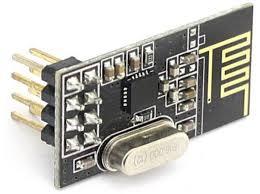
To truly understand where the world of transportation is headed, one must look closely at the data coming out of the RF and sensor industries. The latest Rf Transceiver Market Data shows a massive spike in the adoption of 77GHz radar transceivers, which are the "eyes" of modern advanced driver-assistance systems (ADAS). These high-frequency radars can detect the distance and speed of other vehicles with incredible precision, even in heavy rain or fog where cameras might fail. As cars move from simple cruise control to full autonomy, the number of RF transceivers per vehicle is expected to quadruple. This data isn't just a win for chipmakers; it’s a roadmap for the future of urban planning and safety. By analyzing the adoption rates of these technologies, city planners can better predict when they will need to upgrade their "smart" infrastructure to communicate with this new generation of intelligent vehicles.
The data also reveals a fascinating trend toward "sensor fusion," where the data from RF radar, lidar, and cameras are all combined into a single 3D map of the car's surroundings. This requires high-speed internal wireless or wired links within the car that can handle gigabits of data per second without interference. RF transceivers are even being used inside the car to monitor the driver’s vitals or to detect if a child has been left in a rear seat. The economic implications of this are vast, as traditional automotive suppliers race to transform themselves into tech companies. Furthermore, the move toward electric vehicles (EVs) has created a need for specialized RF systems that can monitor battery health and manage wireless charging stations. As the automotive industry becomes a "software and silicon" business, the data generated by the RF components will become the most valuable asset, providing insights into everything from driving habits to the real-time health of global transportation networks.
Why is 77GHz the standard for automotive radar? This high frequency allows for very small antennas and provides high resolution, which is necessary to distinguish between a car, a pedestrian, and a stationary object like a guardrail.
What is "sensor fusion" in self-driving cars? It is the process of combining data from different sources (like radar and cameras) to get a more accurate and reliable understanding of the environment than any single sensor could provide.
➤➤➤Explore MRFR’s Related Ongoing Coverage In Semiconductor Industry:
Youth Education And Development Services Market
Canada Fiber Optic Sensor Market
China Fiber Optic Sensor Market
Europe Fiber Optic Sensor Market
France Fiber Optic Sensor Market
Germany Fiber Optic Sensor Market
India Fiber Optic Sensor Market

 Arabic
 French
 Spanish
 Portuguese
 Deutsch
 Turkish
 Dutch
Dutch
 Italiano
 Russian
 Romaian
 Portuguese (Brazil)
 Greek
Greek