
Automotive Sensor Advancements Creating New Opportunities in Piezoelectric Ceramics Market
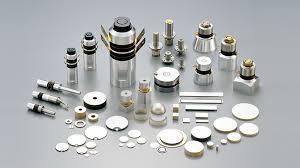
The globalization of industrial trade has brought about a complex web of cross-border regulatory frameworks that profoundly influence the manufacturing protocols, chemical compositions, and international distribution of modern smart materials. As nations establish increasingly stringent environmental protections and workplace safety standards, chemical processing plants and electroceramic fabrication facilities must continuously re-engineer their production methods to maintain market access. The prominent placement of lead-based compounds on hazardous substance watchlists across various international jurisdictions has created a regulatory bottleneck that threatens traditional manufacturing paradigms while simultaneously acting as a powerful catalyst for material science innovation. Companies that proactively invest in compliance infrastructure and clean manufacturing technologies are successfully positioning themselves as preferred partners for multinational original equipment manufacturers who demand fully auditable, eco-friendly supply chains. This regulatory pressure extends beyond the chemical composition of the final product; it also encompasses the carbon footprint of the manufacturing facility, the ethical sourcing of raw materials, and the lifecycle management of industrial waste streams. To safely navigate this labyrinth of international trade compliance and evolving environmental laws, corporate legal teams and operational executives require access to specialized industry breakdowns, such as a comprehensive Piezoelectric Ceramics Market Segment analysis that clearly delineates regulatory impacts across specific product lines and regional jurisdictions.
Beyond the challenges of environmental compliance, the harmonization of international quality assurance benchmarks is playing a vital role in standardizing the performance metrics of electroceramic components used in critical applications. Whether deployed in deep-sea naval sonar systems, high-altitude aerospace telemetry, or life-saving medical devices, these components must exhibit absolute performance reliability and zero defect rates under prolonged operational stress. Consequently, global manufacturers are heavily adopting internationally recognized quality management certifications, such as ISO nine thousand one and AS ninety-one hundred, which require exhaustive documentation of every production step, from raw powder selection to final electrical polarization. The implementation of these rigorous quality standards drastically reduces product variability, enhances customer trust, and facilitates seamless integration into complex multinational engineering projects. This focus on premium quality and absolute compliance is driving a structural consolidation within the industry, as smaller, undercapitalized manufacturers struggle to keep pace with the high costs of regulatory alignment and advanced testing instrumentation. For investment funds and corporate development teams seeking to identify high-growth acquisition targets and evaluate the financial health of the sector, leveraging detailed Piezoelectric Ceramics Market Business Insights is indispensable for conducting thorough due diligence and making highly informed capital allocation decisions.
Why is the harmonization of international quality benchmarks like AS ninety-one hundred critical for electroceramic manufacturers serving the aerospace sector? International quality benchmarks ensure that electroceramic components exhibit absolute reliability, uniform physical properties, and zero defect rates under the extreme vibrational and thermal stresses encountered in aerospace applications. Compliance with these standards guarantees that components can be seamlessly integrated into critical flight-control and telemetry systems.
How does the stringent enforcement of hazardous substance watchlists influence consolidation within the smart materials industry? The high compliance costs associated with engineering alternatives to restricted materials favor large, well-capitalized corporations with extensive research and development budgets. Smaller manufacturing entities often lack the financial resources to re-tool their factories, leading to a structural consolidation where dominant players acquire niche compliance-ready firms.
➤➤➤Explore MRFR’s Related Ongoing Coverage In Semiconductor Industry:

 English
 Arabic
 French
 Spanish
 Deutsch
 Turkish
 Dutch
Dutch
 Italiano
 Russian
 Romaian
 Portuguese (Brazil)
 Greek
Greek